Menu
Concrete Slab Installation Guide for South Jordan
Concrete Slab South Jordan
When you are planning a concrete slab installation, you need to be familiar with the local building regulations and the best methods of preparing your site, along with the costs involved in installing a concrete slab based on the environmental conditions found in South Jordan. A professional will have completed an installation that complies with the 2021 International Residential Code in the State of Utah and has produced a long-lasting foundation for your garage or patio, as well as all types of residential structures. Prior to starting your concrete slab project, you should understand how thick it needs to be and what type of reinforcing materials you will need to purchase, as well as whether you will need a permit. Your location’s environment (climate) will greatly affect your choice of products, and when is the best time to install the product to achieve your desired results. Understanding your options will assist homeowners in making the most informed decision regarding the protection of their investment and complying with the local building code.
Understanding Utah Building Code Requirements
The 2021 International Residential Code (IRC) adopted by Utah states that a minimum of 3.5″ of thickness is required for concrete slabs placed directly on the ground when used in residential applications. It also stipulates that all concrete slabs are to be protected by a 6-mil polyethylene sheeting that is to have a joint lap of a minimum of 6″. These requirements will help to provide structural stability, as well as protect against moisture problems that may develop and cause deterioration of materials located above the concrete slab.
Thickness Requirements Based Upon Application
There are many different types of applications that require various thicknesses of concrete slabs. Residential patios and walkways will most likely require a 4-inch thickness of concrete, while garage floor and driveway slabs will require a thickness of 4 to 6 inches to support vehicles. Slabs for foundation structures may require a thickness of 6 to 8 inches, depending upon the type of soil the structure is built in and the type of structural loads it is subjected to in South Jordan’s varied soils.
Factors That Determine the Cost of Concrete Slab Installations
The cost of installing concrete slabs in the Salt Lake City area generally falls within the price range of $6 to $12 per square foot of finished space for typical installations. When reinforcing steel is added to the mix, the cost of the installation increases by an additional $1 to $3 per square foot. Labor accounts for approximately 40-50 percent of the cost of an installation, while materials account for 50-60 percent. For example, a 20 x 20 foot garage slab would be approximately $2,400 to $4,800 when installed, depending on how much thicker the slab needs to be and what level of reinforcement is required. Due to the fact that there are many established suppliers and experienced contractors in South Jordan, properties in the area tend to receive lower prices than they might elsewhere.
Breakdown of Material Costs
The average cost of ready-mixed concrete in Utah is $120 to $150 per cubic yard, with delivery costs adding $75 to $150 per load. The cost of the rebar or reinforcement materials varies by type, but they run anywhere from $1.40 to $1.85 per linear foot. Wire mesh runs approximately $0.40 to $1.20 per square foot. The cost of site preparation work will vary depending on the amount of excavation that is needed, but it will generally fall in the range of $2 to $4 per square foot.
Requirements for Site Preparation
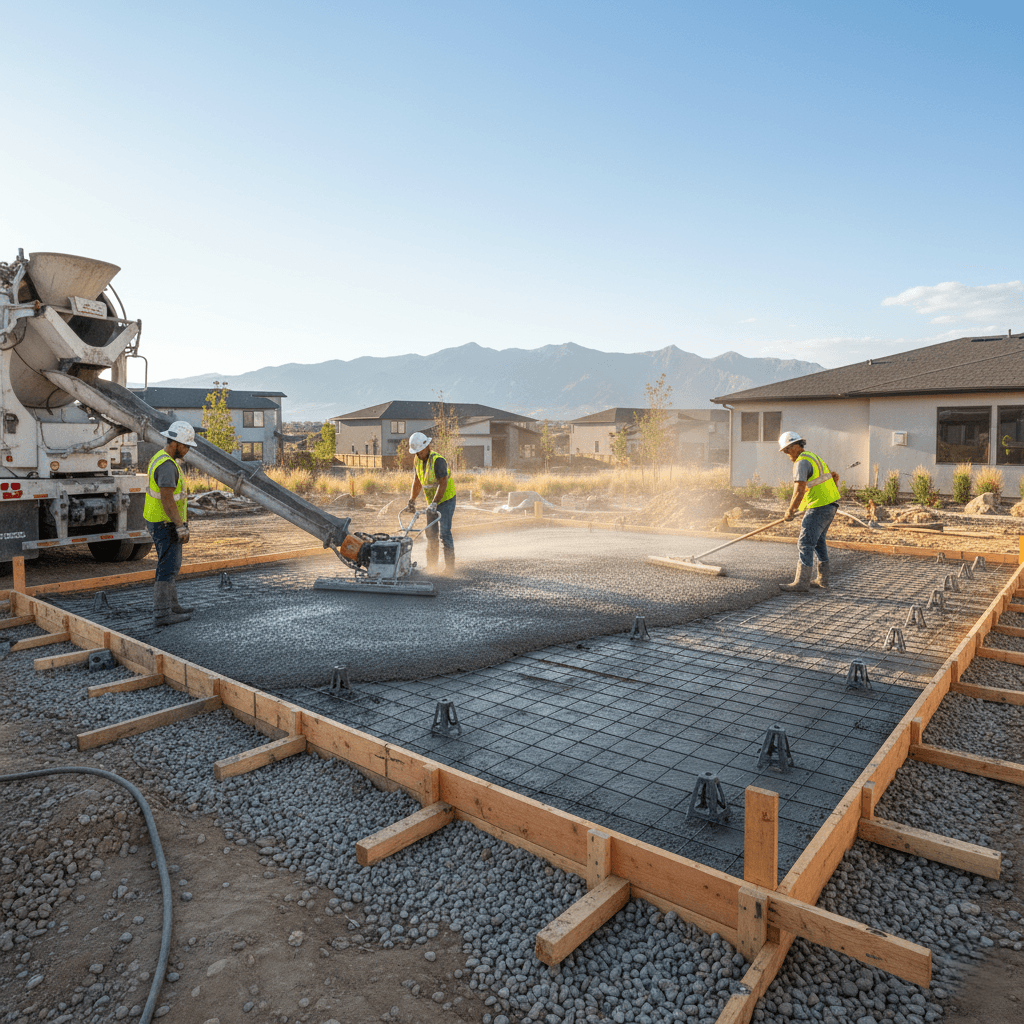
Successful concrete slab installations depend heavily on proper site preparation. Contractors who install concrete slabs in the South Jordan area properly dig to the correct depth to allow for enough space under the slab for the concrete thickness plus the base material. In general, compacted gravel base courses require 4 to 6 inches of aggregate material to create a solid base for the slab and to provide a means of draining water off the slab. Also, proper grading is necessary to direct water away from buildings and toward areas where it can drain into the appropriate drainage area or storm system.
Specifications for Reinforcement
Due to the freeze-thaw climate of Utah, reinforcement is necessary to extend the life of concrete slabs. Wire mesh reinforcement will help to limit the number of cracks in a standard residential application, while rebar will provide greater strength for larger loads or longer spans. As per the building code, reinforcement is mandatory for all slabs that exceed specific sizes or that support structural components. Experienced contractors will determine the correct level of reinforcement based on soil conditions, intended use, and local building codes.
Climate Specific Considerations
South Jordan’s high elevation and extreme temperature fluctuations necessitate specific concrete mixes and installation methods. Air-entrained concrete will aid in resisting freeze-thaw damage prevalent in Utah’s winter months. Concrete slabs should have a strength rating of 2,500 to 4,000 PSI for residential applications, with higher strengths being recommended for exterior applications exposed to weather.
Permits Required and Approval Process
A building permit is generally required for most concrete slab installations in South Jordan, especially those considered structural, i.e., garage floors or foundation elements. The cost of the permit will vary depending upon the scope and complexity of the project, but typically will be in the range of $50 to $200. The South Jordan building department reviews the contractor’s plans to ensure that they comply with the building codes, including the thickness of the slab, the level of reinforcement, and the provision of drainage. Many contractors will assist homeowners with obtaining a building permit as part of their services to ensure that the process goes smoothly and that all requirements are met.
Timeframe and Installation Process
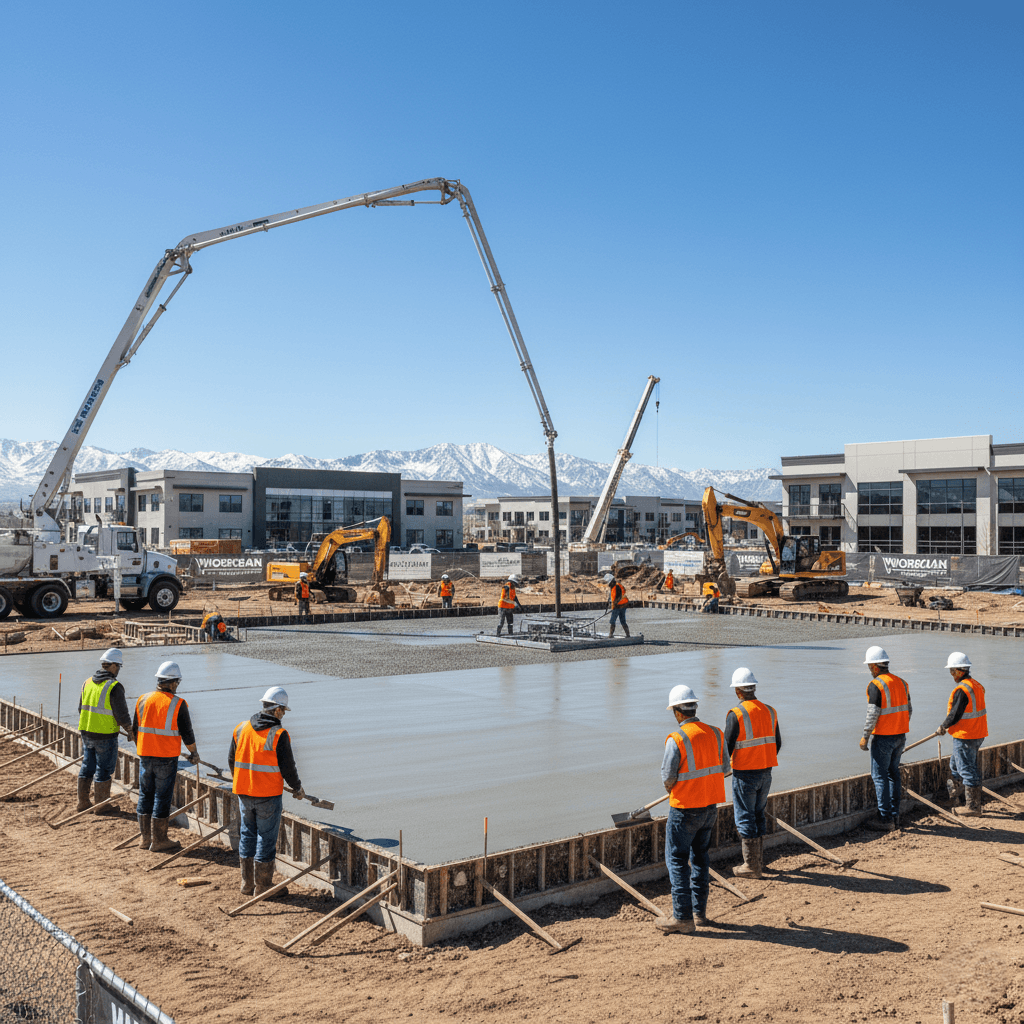
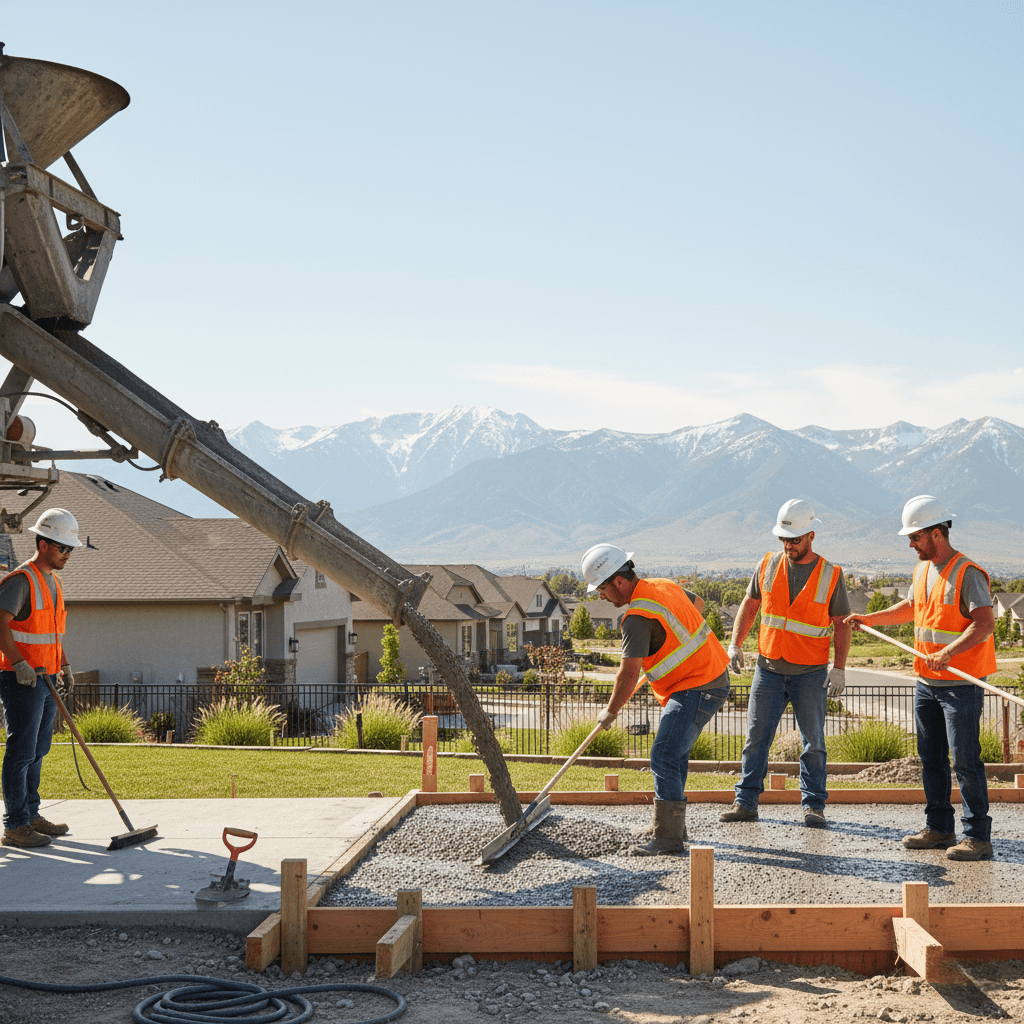
Generally, a professional installation of a concrete slab can take two to four days from start to finish. One day is generally spent preparing the site and constructing the formwork. On the second day, the concrete will be placed, and some preliminary finishing will be done. After the concrete has cured for twenty-four to forty-eight hours, the finishing will continue until the slab is complete. Weather is a major factor in the installation timeframe, as the ideal installation times are when temperatures are moderate and winds are low.
Considerations Regarding Seasonal Installation
While spring through fall is the preferred timeframe for installing concrete slabs in South Jordan, professional contractors can perform installations year-round, provided they follow proper procedures. During winter months, specialized cold-weather mixes and protective measures are necessary to assure proper curing of the concrete. While summer months offer good working conditions for performing finishing operations, it is beneficial to pour concrete in the morning to avoid the heat of the day, which can negatively affect the quality of the finish.
Typical Residential Uses in South Jordan
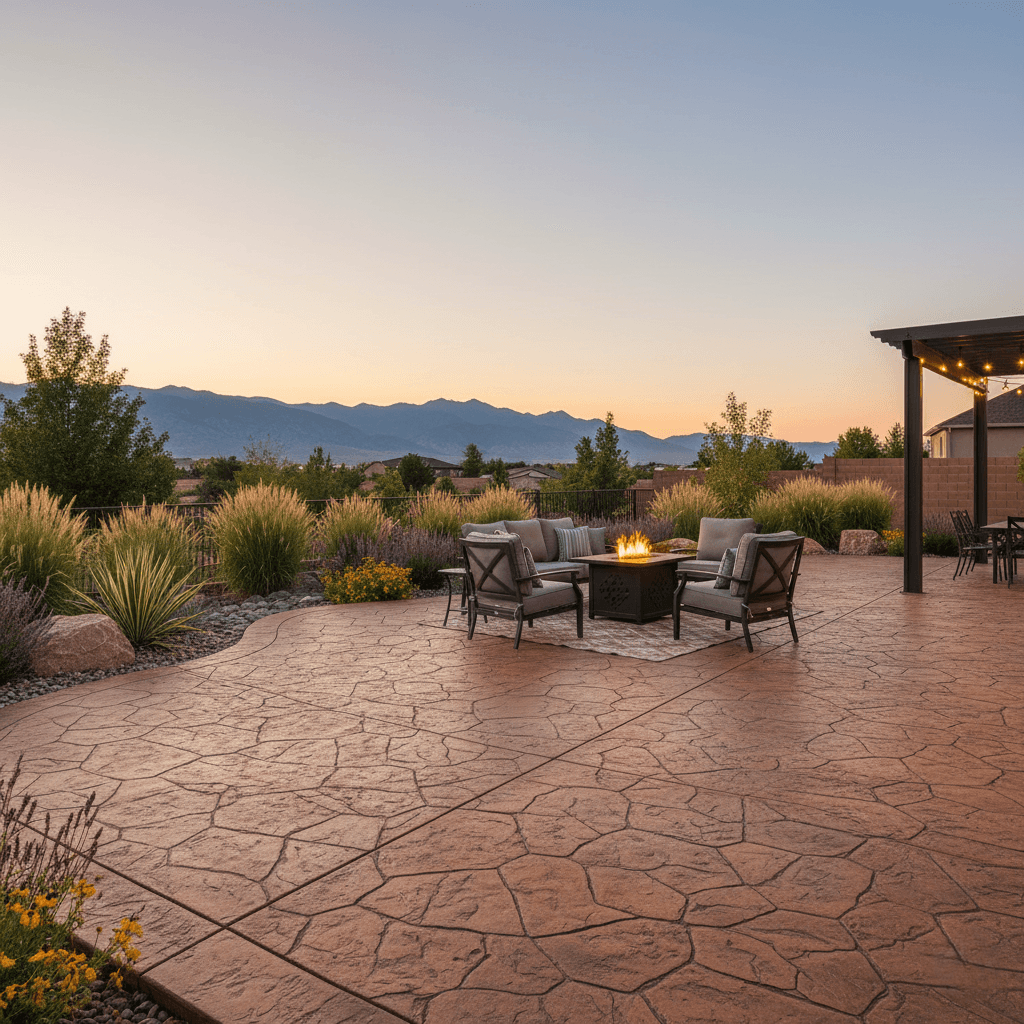
Residential uses of concrete slabs in South Jordan include garage floors, patio installations, shed foundations, and walkway systems. All of these applications have specific requirements regarding the thickness, reinforcement, and finishing of the concrete. Properties near established neighborhoods often require coordination with existing drainage systems and utilities prior to the installation.
Quality Assurance and Inspection
Professional contractors will perform quality assurance checks, including strength tests of the concrete, verifying the thickness of the concrete, and inspecting the placement of the reinforcement. The South Jordan building department will conduct inspections of the installation at key points, including excavation, placement of the reinforcement, and completion of the installation. These inspections will help to verify that the installation complies with the local building codes and will protect the homeowner’s investment in the property.
Moisture Protection and Drainage
To protect the concrete slab from damage due to excessive moisture, an effective drainage design must be employed. Effective drainage design will ensure that no standing water develops around the perimeter of the concrete slab, thereby protecting both the slab itself and other structures that may be affected by the moisture. Proper slope design will direct surface water away from the buildings toward a suitable collection point or storm system. A properly applied vapor barrier will prevent moisture from migrating upward through the concrete slab, thereby protecting the interior spaces and materials of the building from moisture damage and humidity.
Maintenance Requirements Over Time
Once installed, well-constructed concrete slabs require little maintenance. However, a good sealant should be applied to the slab every three to five years to protect it from moisture and wear. If small cracks appear in the slab, they should be repaired immediately to prevent them from becoming large problems that affect the structural integrity and appearance of the slab over time.
Hiring a Contractor to Install Your Concrete Slab
When hiring a contractor to install a concrete slab, you want to hire someone who understands the local regulations and soil conditions in South Jordan. An experienced contractor will have the right equipment, trained personnel, and warranties to protect your investment. An inexperienced homeowner will not have access to the same resources and therefore cannot guarantee the same quality and compliance with regulations as a professional contractor.
Coordination with Utility Systems
It is common for concrete slab installations to require coordination with electrical, plumbing, or gas utility systems. Contractors who specialize in concrete slab installation will coordinate with utility companies to plan and perform utility rough-ins during the preparation phase of the installation so that the utilities are properly positioned and protected before pouring the concrete. By doing this, costly modifications can be avoided, and the utility systems can be completed in accordance with local regulations.
South Jordan Concrete Pros specializes in installing concrete slabs according to local regulations and is familiar with all of the local requirements for concrete slab installation in South Jordan. Our team of experienced professionals will handle all aspects of the installation from obtaining permits through the final inspection to ensure your concrete slab installation is completed correctly and provides long-lasting performance and value.
LATEST POSTS